A heartbeat can look completely normal during a short ECG in a clinic and still behave differently later in the day. What happens when you are asleep? Does your heart rhythm change when you climb the stairs? What about during a stressful meeting or while resting on the sofa?
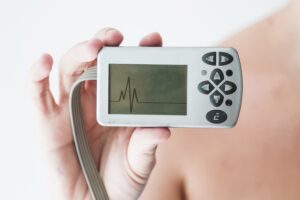
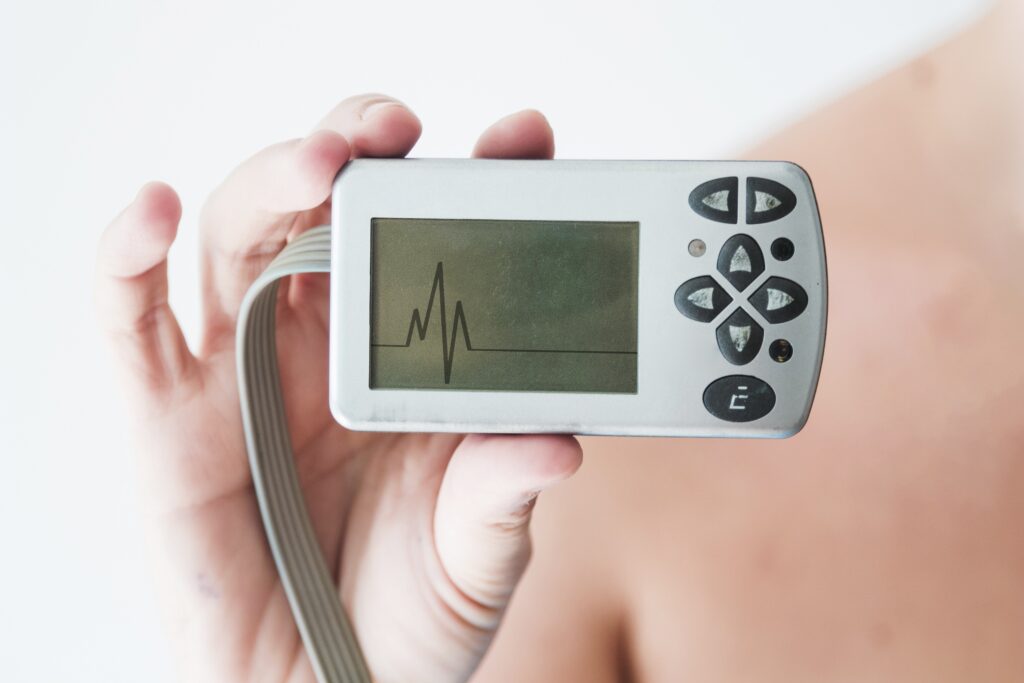
This is where a Holter ECG can provide a different kind of information as it records your heart’s electrical activity continuously while you go about your usual routine.
Key takeaways
- A Holter ECG records heart rhythm over an extended period rather than for just a few seconds.
- It can show how your heart rate and rhythm behave during sleep, activity and rest.
- It may help identify intermittent rhythm abnormalities that are not present during a clinic ECG.
- Your symptoms, daily activities and the recording are considered together when interpreting Holter ECG results.
- A normal recording does not necessarily explain every symptom or rule out every possible heart condition.
Why can a longer ECG reveal something a short ECG misses?
A standard ECG provides a brief snapshot of the heart’s electrical activity. That can be useful, but some rhythm disturbances come and go.
A Holter monitor is worn during normal daily life, allowing the recording to capture changes that might otherwise be missed. Depending on the monitoring period, it may record episodes of an unusually fast, slow or irregular heartbeat, extra beats, pauses or certain abnormal rhythms.
The results are not interpreted in isolation. A doctor may also consider when symptoms occurred and what you were doing at the time.
What can happen to your heartbeat while you sleep?
Your heart rate normally changes during sleep. It may become slower compared with periods of activity, while changes can also occur between different stages of sleep.
A Holter ECG can show the rhythm during these overnight hours and may identify an abnormal rhythm or unusually prolonged pause if one occurs during the recording.
This can be particularly useful when someone experiences symptoms such as a racing or irregular heartbeat, dizziness or unexplained episodes at night. However, a Holter ECG is not a general test for every sleep-related condition.
What about exercise and everyday activities?
One useful feature of Holter monitoring is that you do not have to remain in a clinic while the recording takes place. Your heartbeat can be assessed while you walk, work, climb stairs, rest or carry out other usual activities, subject to the instructions given for the particular monitor.
Keeping a simple diary can therefore be helpful. You may be asked to record,
- when you notice palpitations, dizziness or other symptoms
- what you were doing at the time
- when you exercised or were particularly active
- when you went to sleep and woke up
If a symptom occurs while the monitor is recording, the timing can be compared with the heart rhythm at that point.
How should you interpret your Holter ECG results?
The report may contain information about heart rate, rhythm and any recorded irregularities. But a finding on the report does not automatically mean that it is the cause of your symptoms.
For example, extra heartbeats can occur in people without a serious underlying rhythm problem, while an important rhythm abnormality may require further assessment depending on the circumstances.
This is why doctors consider the recording alongside your symptoms, medical history and other test findings rather than relying on a single number or phrase in the report.
Frequently Asked Questions
Can a Holter ECG detect an irregular heartbeat that happens only occasionally?
It may, provided the episode occurs while the monitor is recording. If symptoms are very infrequent, another form of longer-term monitoring may sometimes be considered.
Can I sleep normally while wearing a Holter monitor?
Generally, the monitor is designed to be worn during normal activities, including sleep. You should follow the specific instructions provided about bathing, showering and caring for the device.
Does a normal Holter ECG mean my heart is completely healthy?
Not necessarily. It means that no relevant abnormality may have been detected during the monitoring period. Other heart conditions may require different tests or assessments.
Should I exercise while wearing the monitor?
This depends on why monitoring has been recommended and the instructions for your device. You should clarify which activities are appropriate rather than deliberately exercising more than usual just to try to trigger an abnormality.
Schedule a consultation to discuss Holter ECG monitoring
If you have recurring palpitations, unexplained dizziness, episodes of a racing or irregular heartbeat, or symptoms that are difficult to capture during a short ECG, longer monitoring may be considered as part of your assessment.
At TT LIM Cardiology Clinic, Dr. TT Lim and his team can assess whether Holter ECG monitoring is appropriate based on your symptoms and medical history, and explain what your results may mean in the context of your overall cardiac assessment. A consultation can also help determine whether further evaluation is needed.