Key takeaways
- Spider veins are usually small, visible blood vessels near the skin’s surface and are often harmless.
- They can sometimes occur alongside deeper vein problems, particularly when symptoms such as aching, swelling or skin changes are present.
- Spider vein sclerotherapy may be considered when treatment is appropriate, but whether it is suitable depends on an individual assessment.
- New, changing or symptomatic veins should not automatically be assumed to be a cosmetic concern.
Seeing thin red, blue or purple lines on your legs can be easy to dismiss as a cosmetic issue. Often, that is all they are. But spider veins can sometimes be a visible sign of changes in the veins beneath the skin.
So, when should you look beyond appearance?
Could spider veins be linked to a vein problem?
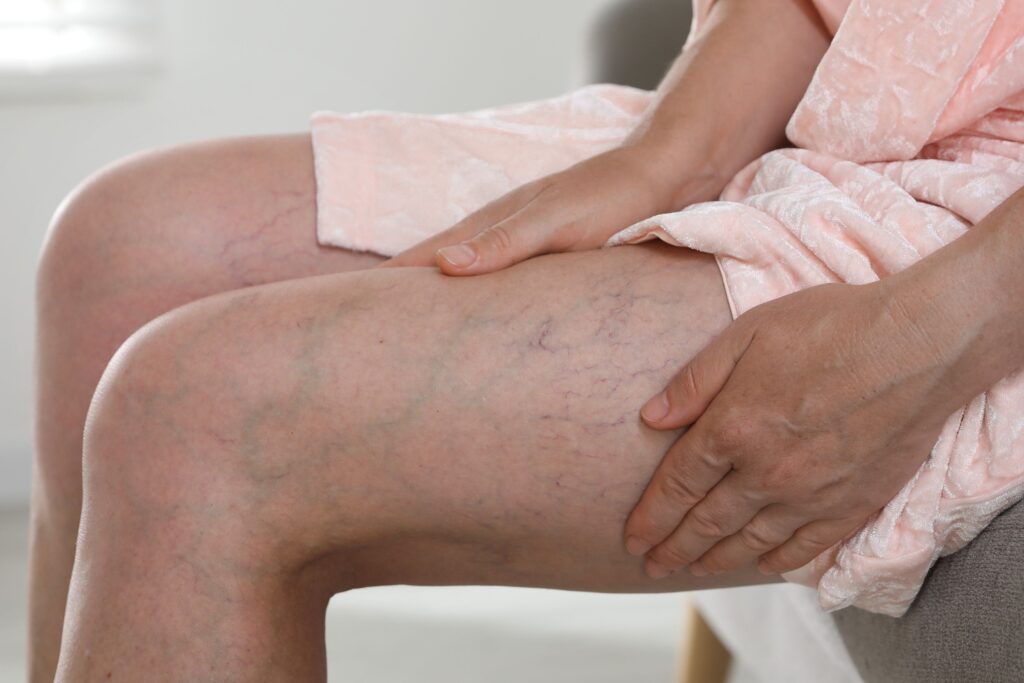
Spider veins, also called telangiectasia, are small blood vessels that become more visible near the skin’s surface. They are different from larger, raised varicose veins, although the two can occur together.
For some people, spider veins cause no symptoms at all. Others may notice,
- aching, heaviness or discomfort in the legs
- swelling, particularly towards the end of the day
- itching or a feeling of pressure around the affected area
- larger or more prominent veins developing nearby
- skin changes around the lower legs
These symptoms do not necessarily mean that a significant vein disorder is present. However, they are reasons to consider a medical assessment rather than treating the appearance alone.
When is spider vein sclerotherapy considered?
Sclerotherapy is a procedure in which a solution is injected into selected small veins. The aim is to cause the treated vein to close so that blood is redirected through other veins.
It is one treatment option that may be considered for suitable spider veins. However, treatment decisions should take into account the appearance and distribution of the veins, symptoms, medical history and whether there may be an underlying venous problem.
An assessment may therefore be useful before deciding on treatment, particularly if the veins are accompanied by symptoms or larger varicose veins.
What if the veins are changing?
A spider vein that has gradually become more noticeable is not automatically a warning sign. Veins can become more visible with factors such as age and hormonal changes.
However, seek medical attention if you notice a sudden change accompanied by significant swelling, pain, redness or warmth, or if a vein becomes hard and tender. These symptoms may require assessment for causes other than uncomplicated spider veins.
A healthcare professional can determine whether further evaluation is appropriate based on your symptoms and examination.
Is treatment always necessary?
No. Spider veins that are not causing symptoms do not necessarily need medical treatment.
If treatment is being considered mainly because of appearance, it is still important to understand that results can vary between individuals and that no procedure should be assumed to remove every visible vein permanently. New veins may also develop over time.
Frequently Asked Questions
Are spider veins dangerous?
Most spider veins are not dangerous. However, symptoms or associated larger veins may warrant medical assessment to determine whether there is an underlying vein problem.
Can spider veins cause leg pain?
Spider veins themselves may not cause symptoms in every person. Leg aching, heaviness or swelling can have several possible causes, so persistent symptoms should be assessed rather than automatically attributed to spider veins.
Is sclerotherapy suitable for everyone with spider veins?
No. Suitability depends on individual factors, including the veins being treated and the person’s medical history. A consultation can help determine whether sclerotherapy or another approach is appropriate.
Can spider veins come back after treatment?
Treated veins may not remain visible, but this does not prevent new spider veins from developing elsewhere. Individual results can vary.
Should I see a doctor before having spider veins treated?
If the veins are new, symptomatic, changing, associated with larger veins or accompanied by swelling or other concerns, medical assessment is sensible before treatment.
What should you do if you are concerned?
A spider vein may be little more than a cosmetic concern, but its appearance should be considered alongside any symptoms or changes in the legs. An individual assessment can help distinguish a straightforward cosmetic issue from a situation that may require further evaluation.
If you are in Singapore and are concerned about visible or symptomatic leg veins, a consultation with Dr Lim Tai Tian as well as Dr Peter Chang at Dr TT Lim Cardiology Clinic can provide an opportunity to discuss the changes and whether further assessment or treatment, including options such as spider vein sclerotherapy, may be appropriate for the individual.